ARTISTS   WORKS   EXPO      INFO   CART
muto is a tumblr started in 2011, an office and a pseudonym. As a tumblr is a recollection of low resolution digital fragments.


GALLERY GALLERY TALKS

(GG)Ever since I have become aware of you and your work, you have been operating under a pseudonym – muto –, is there a specific reason for this choice and can you explain how muto was born?
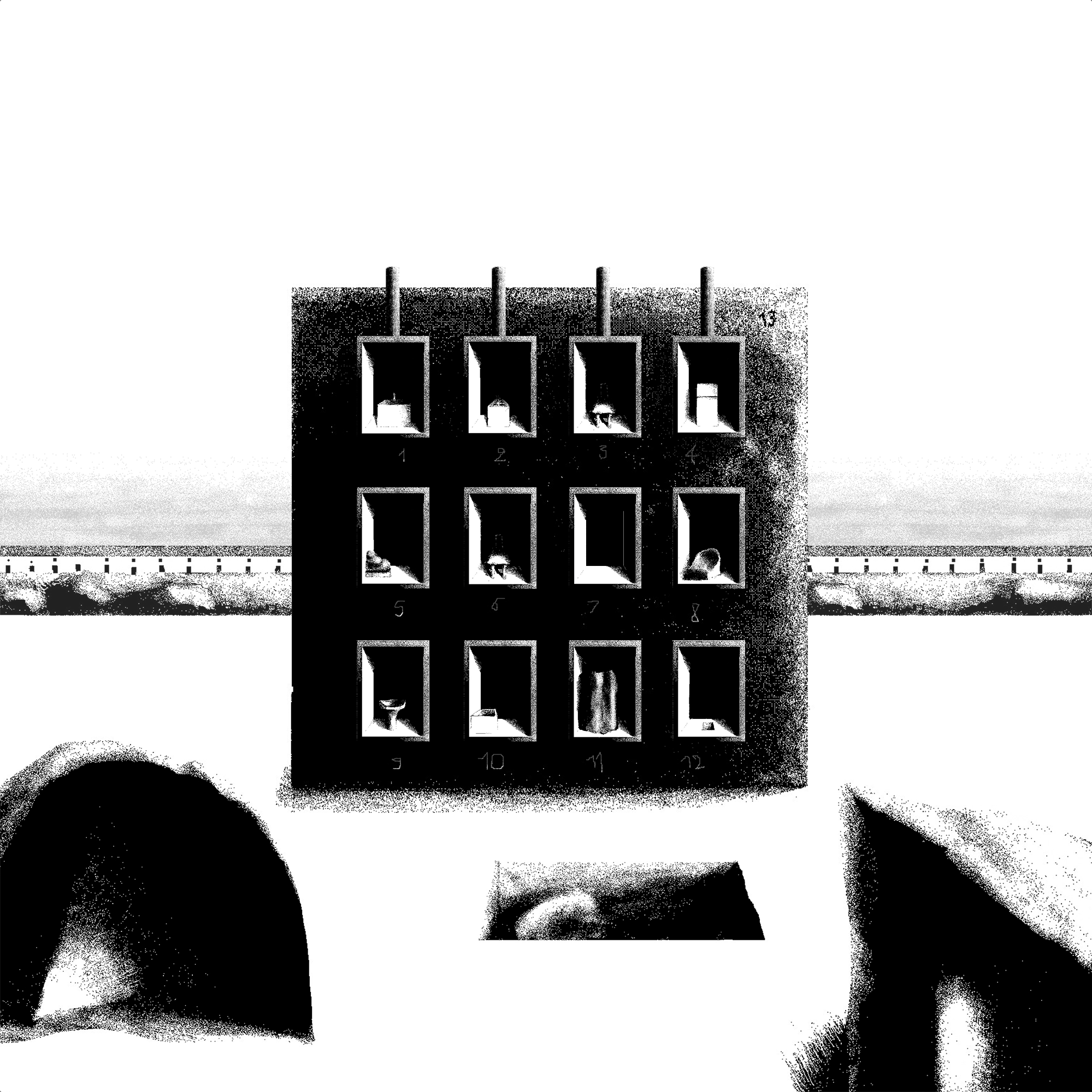
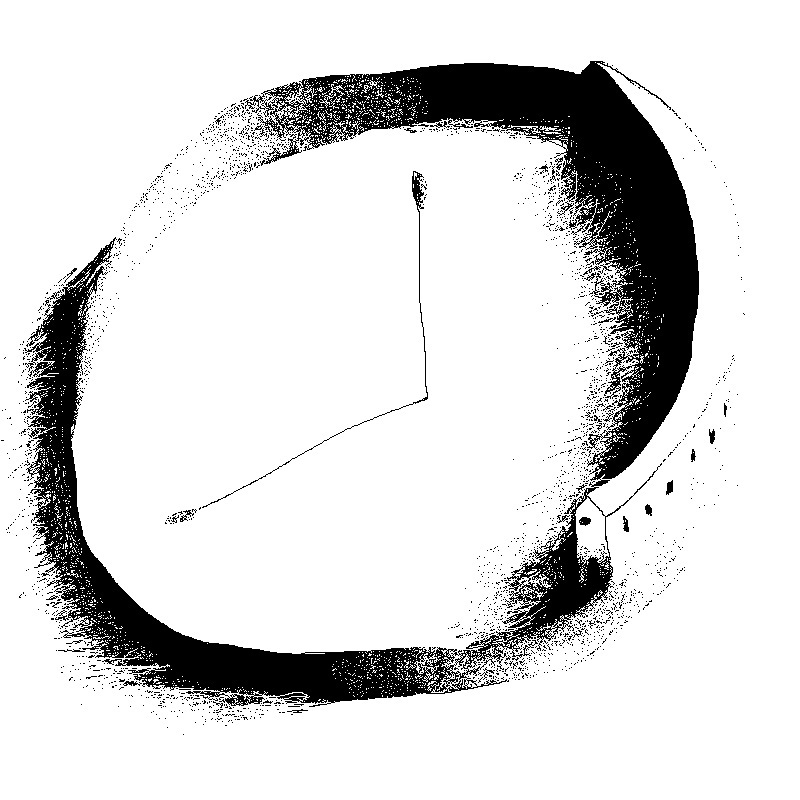
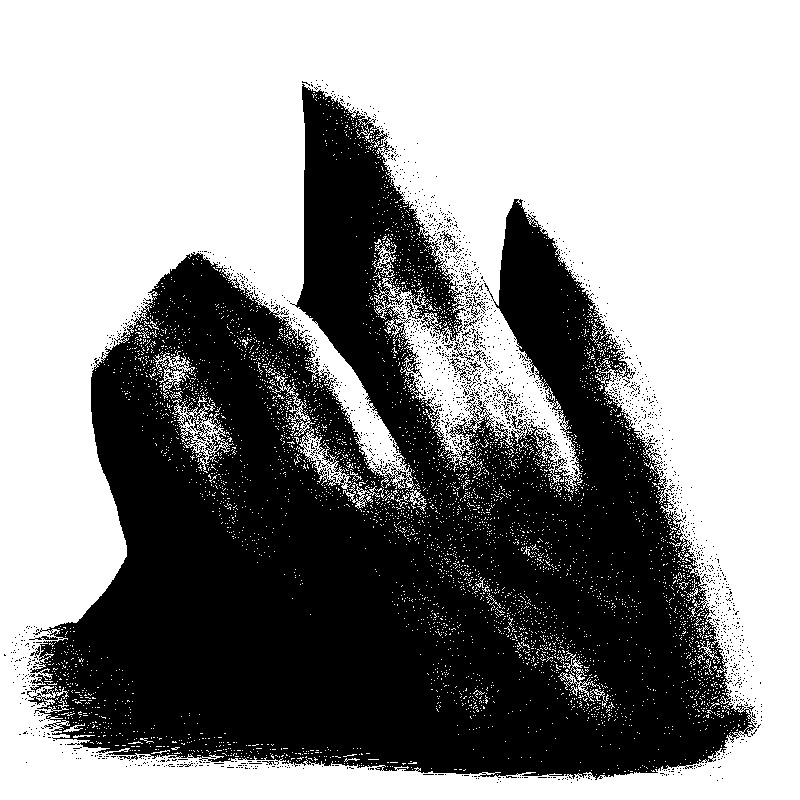
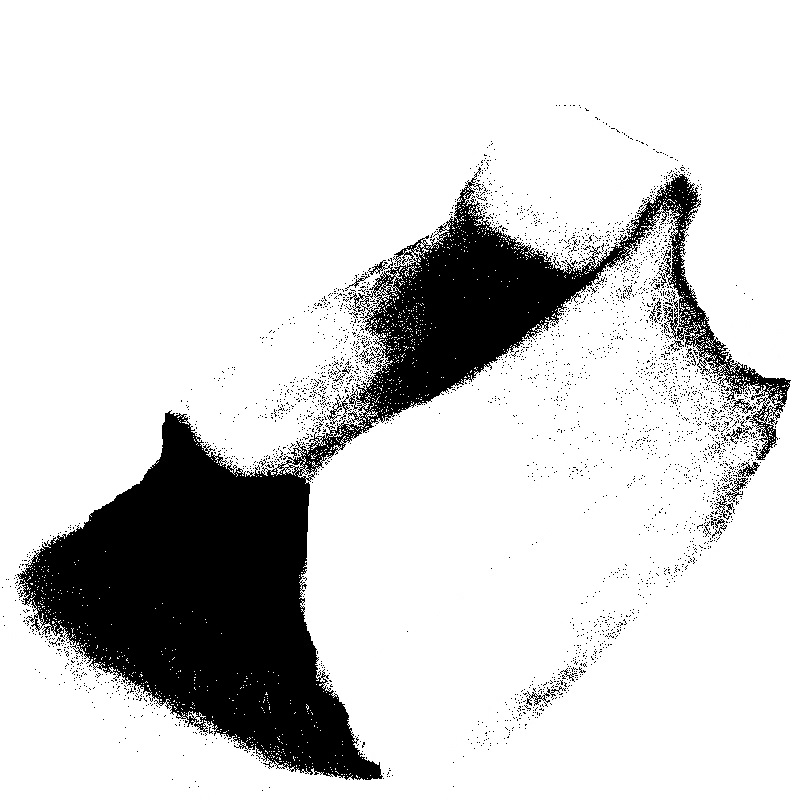
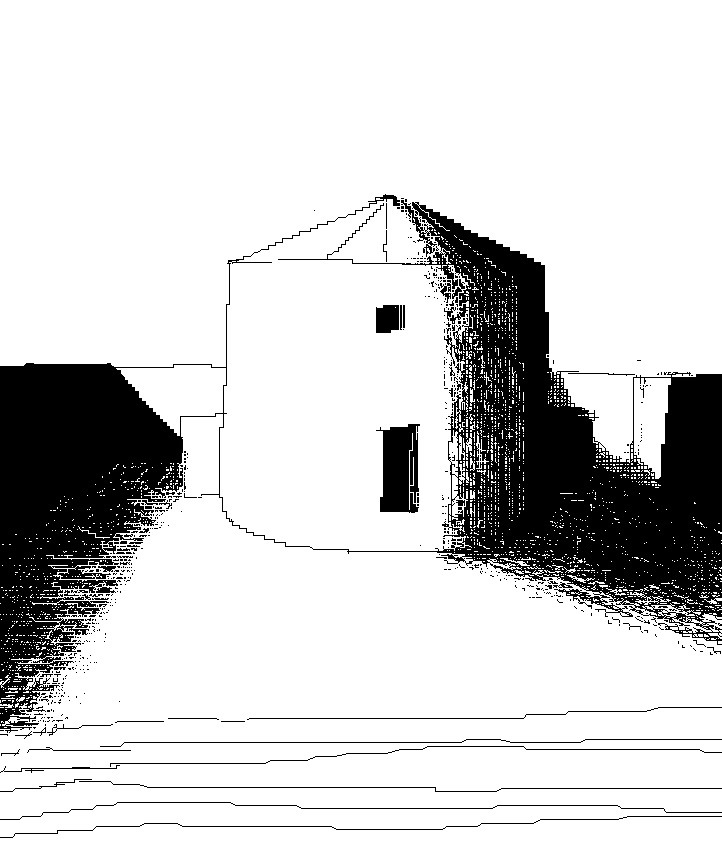
(MUTO)muto initially started as a Tumblr of small digital drawings and texts. The word “muto” refers to a person who does not speak, either by choice or due to a physical inability. In my case, I felt a deep discomfort in exposing my position on theoretical aspects, “artistic” justifications, so I decided to start collecting the fragments of drawings and texts that were dear to me. The drawings had to follow precise rules to save time and preserve a lack of definition, both of meaning and of stroke: all the drawings had to be made using the mouse, at 800 × 800 px, in black and white, using the most accessible, most banal software possible; in my case, MS Paint. I was very fascinated by Morandi’s work: the repetition, the absence of text, the poverty of the stroke, a certain silence typical of the region where he lived; but I had also grown up in a digital reality where low resolution, the anonymity of usernames, .jpg, .gif, .avi and all the other interferences defined the early Internet aesthetic. Over time, muto became a catalogue, a database, of experiments and fragments of my memory.

(GG)Alongside your ongoing artistic research, you are also an Architect rooted in the profession and in the inevitable pragmatism that characterises it. How do you reconcile these two practices?
(MUTO)In the profession we are often pushed to accumulate technical knowledge, functional to our work. We have to know regulations, laws, details, prices, coefficients. In architecture, when one of these systems fails, errors take on a scale and a physicality that are sometimes difficult to control. And it is our relationship with error that often obsesses us. This research does not have great utility; it lacks much of the precision required in the profession. It is a collection of drawings, of useless machines, that recall places, spaces dear to me, but it has no practical purpose. It is a stance that arises from a lack of opportunities and a sense of boredom with much of contemporary architecture. I don’t say this in a negative tone; on the contrary, I believe that the lack of utility and the continual
presence of error leave room for a certain ambiguity and a childlike freedom to experiment.

(GG)Your work carries a certain sense of timelessness: it’s both ancient and contemporary. Many references come to mind both for the graphic rendition and the atmosphere you create – from Piranesi to Brodsky, from De Chirico to Rossi – but what are the references that inform you and your work?
(MUTO)Any list I could offer will always be partial and incomplete, but to answer your question I can describe part of the process from which some of these references emerge.
I’ve long been interested in the personal relations among the authors you mention: how Ghirri photographs both Rossi and Morandi; how Morandi and De Chirico, for a brief period, share an impulse toward the metaphysical; how Rossi’s sense of time is influenced by De Chirico’s eternal enigmas; and how Ghirri translates that eternity into photography. I often enjoy mixing texts and images by different authors, taming these strange creatures as collages or simple thoughts. For example, I sometimes think of how the architectures of Brodsky and Piranesi resemble those drawn by the Japanese author Tsutomu Nihei in BLAME!, a manga set in an undefined future where architecture overruns everything, leaving no space for sky or nature. I have never visited Japan, but I remember vividly the Japanese Pavilion at the 2008 Venice Biennale, where Junya Ishigami drew in pencil on white walls: filament-thin buildings wrapped in an equally fragile nature. The line was so imprecise, of a constant thickness, terribly ephemeral, at times barely legible. In the same way, I’m drawn to the viscosity of shadow in drawings and in the architecture of temples, in Etruscan necropolises, in the works of Étienne-Louis Boullée and then, later, in those of De Chirico and Rossi, and in many horror movies. It was by reading Mark Fisher more recently that I felt I understood my obsession with Rossi and De Chirico, but also with Lynch, both as director and painter. He helped me accept my strong attraction to the unknown, to a teenage fascination with

(GG)Are there any recurrent themes, or obsessions that cut through your body of work?

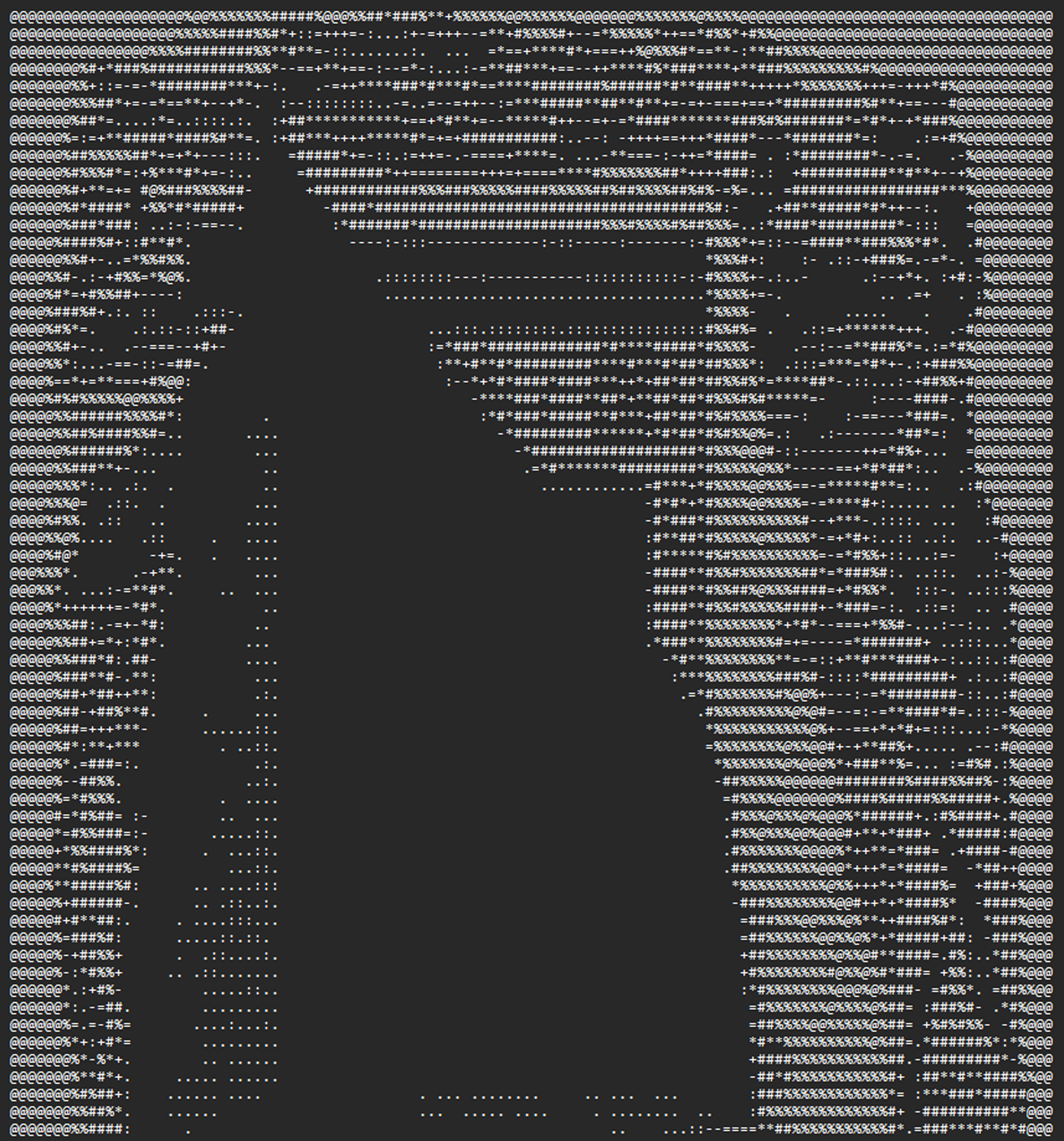
(MUTO)There are two themes that often recur in the preparation of my drawings: low resolution and shadow. These are common in the representation of architecture and in sacred architecture. There is an image I love from Napoleon’s expedition to Egypt. It is the redrawing of a doorway in the Valley of the Kings and Queens. The image is set up like an elevation in which the natural drawing of the stone and the architecture fuse together. It is almost impossible to capture the full complexity of the stone unless one undertakes a deep exercise in copying reality. In this drawing the author performs a reduction. The stone is rendered with a few lines that let you intuit the exact point where the passage from nature to myth takes place. This reduction, which for me also becomes a reduction of the stroke and of resolution, has long been fundamental in architectural representation. It gives technical clarity and synthesis, and it also deliberately invites the error in the viewer and an open-ended reading of the image. I place on the same level the reduction of the stroke and the loss produced by compression. Non definition and low resolution are sometimes completed by our brain with a sense of strangeness. When Hito Steyerl writes In Defense of the Poor Image in 2009 she considers the accumulation of poor images, the ground of what our Internet has become, a source of freedom and a subproletarian component that mocks the high definition of screens and digital cameras, a high definition associated with the prestige of advanced technology and with the absence of free interpretation. Returning to the representation of the doorway, a second element in the image draws me in. The surprise in my case occurs when we observe a black liquid, a kind of oil that clings to the drawing, rests on the stone, extends over the architecture, until it swallows completely that void which is the threshold of access to the tomb. Shadow is a viscous substance, a slime that scorches the drawing, hides everything, and what it does not touch, it leaves to burn in the white light of the sun. I realize
this is not an accurate description of the image, but I do not think it is important. What emerges from this representation, as in many of De Chirico’s perspectives, in Rossi’s elevations and plans, and also, to name a few, in Morandi’s bottles, in Bacon’s tentacular shadows, in Boullée’s voids, and in how we perceive the space of temples, is a deep sense of weirdness, a shift away from reality, a superposition between the simple representation of what we see and a sliding toward hidden meanings that are sometimes unsettling. These meanings are often concealed not so much in the idea of the project as in our way of perceiving space, solids and voids, the darkness that has always been the source of everything inhuman that surrounds us. It surprises me that in architecture this sense of weirdness is considered so little, or rather that it is so poorly defined and studied. It does not have only sacred, grotesque, or Gothic roots. It also belongs to our contemporary world, to our current way of living domestic space, to the nebulousness of our technologies, and to all those dark and deep recesses that now more than ever occupy Internet and our way of interacting with it.

ASCII_Tomb_Drawing_A4.txtASCII_Tomb_Drawing_A4.txt

(MUTO)I like, almost as a game, to place my drawings near texts by authors I care about. Those texts illuminate certain details, but they are never complete and, as you suggest, they keep a degree of ambiguity. I do not treat them as fixed or immutable ideas. They are texts that have partly lost their original meaning and now feed a large, formless mass of ideas. From this proximity, within that ambiguity, new paths for experimentation open up.


(GG)This series, as other previous works, has been executed with a rather unusual tool: Paint MS. It is a precise choice, one might define it as anachronistic, especially given the current technological advancement and the impact it has had on architectural representation, and not only. It looks like you are drawing on screen just as you would be with a pencil on a piece of paper, and you are doing this by only using black and white. How did this come about?

(MUTO)As I grew up, I watched with nostalgia the disappearance of the first software I used. I began to take an interest in recovering a sub-genre of lost software: abandonware, products no longer commercially relevant, no longer purchasable, that had lost support from their creators. I was not particularly interested in reviving the aesthetics of these programs, but in reliving that strangeness present in the first sounds, the first colors, the first interactions with technology.
I experienced their disappearance, in part, as an act of violence within what the Internet ecosystem was. While I searched for these wrecks, I drew animated gifs for I do not even know which platforms, perhaps for the early forums that allowed users to customize their avatars.
Before touchscreens, pens, and tablets, the other connecting tool, after the keyboard, that separated our digital life from our private domestic life was the mouse. It was a slow and imprecise tool, awkward in its lack of typology, yet somehow it became the key to our work and, for many, to videogames. Then came, little by little, the increase of precision, speed, refresh rate, DPI. The evolution of technology led to the disappearance of error.
Amid all this, MS Paint was software many people used as a game, a fixture on our desktops, present in every Windows system. The first inhuman colors, the spray tool, the few options available; all this allowed the creation of very low-resolution images that were often impossible, no matter the effort, to make artistically interesting or relevant. File sizes and formats were, and still are, ridiculous compared to what high definition has accustomed us to. Saving as .jpg, each sharing of the image tends to lose quality and definition, and over time even meaning.
I think it was the use of such a primitive, such a poor program that fascinated me, a bit like looking at Niépce’s first photograph, where the image of an empty street between barely visible buildings spills into a sense of oneiric estrangement. Over the years, MS Paint has been modified more than once; it has become more modern, losing part of the simplicity and banality it had at the beginning.
As anachronistic as it may be to use this abandoned software, there is a subculture in which the aesthetics of early Internet accompanies the production of images and sounds that sit between videogames and works that could belong to surrealist authors. And this imaginary, which continually draws references from architecture, to the past, empty rooms, infinite spaces, saturated colors, fogs that hide the horizon, constitutes one of the liveliest sources of our Internet culture. We find ourselves surrounded by specters and ghosts, and even our technologies do nothing but fish in the past, collect, sort. It is the spectrality of our distorted past that continually haunts our present.

(GG)What’s next?
(MUTO)I hope to keep collecting and gathering new material. This work is not yet done.